More support for learning challenges is one parent’s wish and that includes supporting social-emotional development in young children at home and school. School could mean daycare, play groups, preschool, and kindergarten.
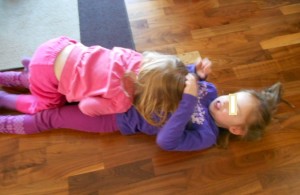
It’s hard to separate social—dealing with others, and emotional—coping with feelings, because they are so linked. More and more, research is showing us that social and emotional skills and strategies affect how well children cope in school. One of the best resources for kids as they learn basic social skills is play. As children interact with others they practice sharing, taking turns, waiting, and solving differences and playing without hurting. Kids build relationships and figure out how to care for other people.
When figuring out emotions, it is really helpful for adults to name emotions for kids. When we see a child is happy, we can say, “I see you are happy. Your face is smiling.” Doing the same thing for feeling sad, scared, anxious, angry, and frustrated, links the word and the emotion. That way kids can tell us what they are feeling. Having the words for emotions is key to understanding them and to expressing them. As children play, they will explore these emotions. During imaginative play, they may pretend they are frightened or brave, angry or upset, excited and silly.

Besides play, explaining our behavior gives clues about social interactions and feelings. Children will learn by watching and imitating the adults around them.
Two playful activities for supporting social-emotional development in young children are to make faces. Kids enjoy making different expressions in a mirror and showing them to us. What does your happiest face look like? How about your saddest? This helps for learning to read faces. Sing “If You’re Happy and You Know It” and add verses for other feelings. What action would you do for “If you’re sad and you know it?” or “if you’re scared and you know it?”
Are there some play activities your child might do today for social and emotional development?
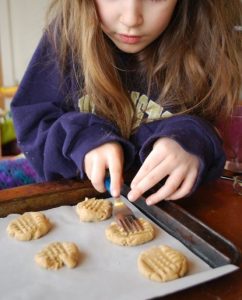 Self-regulation involves coping with emotions, controlling impulses and attention, handling problems, and being able to wait. Early childhood expert, Dr.Ida Rose Florez, has studied young children and the role of self-regulation. In her article,

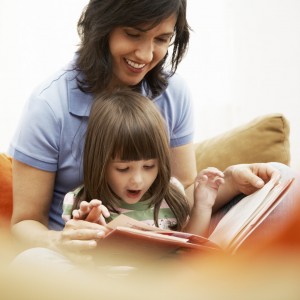 Kids will imitate others around them. We can tell our reasons for the choices we make. “I think the sky is cloudy and the wind is chilly so I am going to take a sweater, just in case.” Of course, kids seem to choose not to follow our example when it’s sensible, and to do exactly what we do when the choice isn’t so great.