Tag Archives: premath learning activities

Kindergarten Readiness: Football for Number Learning and Fun

Did you know that football can help promote kindergarten readiness? Many homes had football on their tvs this weekend, and football certainly has numbers. There are numbers on jerseys, numbers on scores, big numbers on the field and more. Lots of experiences with numbers, in a variety of situations is what children need to build their understanding of numbers and other math concepts.
Football Team in a Huddle
Just learning the words for numbers can be quite a challenge, let alone being able to name them in order. Then, number words need to get connected to how numbers look. There’s a lot of brain connections that need to be made for learning numbers. Children need to hear the names of numbers over and over again and see what they look like. Reading books about numbers, singing number songs, counting the steps and stairs, looking for numbers in signs and displays, and even watching football are ways for kids to encounter numbers.

Are there some ways that you can include number fun and learning for your child again today?
Share this:
Share this page via Email Share this page via Stumble Upon Share this page via Digg this Share this page via Facebook Share this page via Twitter
Share

Kindergarten Readiness: Halloween Learning & Early Math Fun

Halloween is almost a made-to-order opportunity for all sorts of early learning and play, kindergarten readiness activities and fun. Besides costumes and dressing up with a great deal of imaginative and pretend play, there’s lots of excitement and stimulation for the senses. Things to see, hear, eat, smell and taste, although parents and caregivers are not so keen on all the sugar.

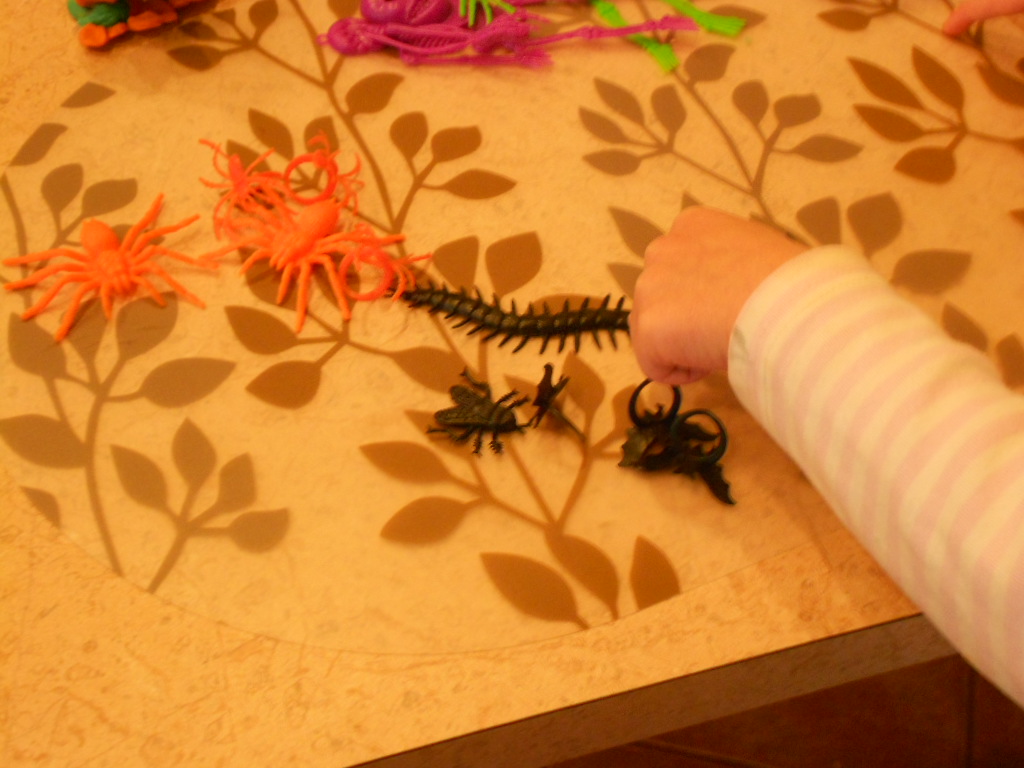
The spiders, bats, ghosts, skeletons and more are also fun to count. When it comes to early math, children soon learn to say the numbers. Although kids may miss a few numbers in the sequence they enjoying counting. Even more important than saying numbers correctly, kids need to learn the idea of oneness. Oneness means that one number belongs to one item. As very young kids say each number they do not always point to just one object or a single object may have a few numbers accompanying it. The concept of one number-one item is basic to understanding what counting is all about.

hallow-countingTo help kids learn, they need lots and lots of experiences saying numbers and touching objects. Some of this they practice on their own, but parents and caregivers can drop in on their play every now and again and count with them. When you count with young children, let them see that each time you say a number you also touch or point to only one item. If they are counting and get confused, you can spread the objects out so that they can count them more easily. If counting is incorrect, the first step is to help kids say one number for each thing and then count them together. Again, much practice is needed and kids do make mistakes before they figure it out.

This bag of items from the dollar store was great fun to count, sort into groups, and to be pretend treats. What can you find at your house for some Halloween counting and early math fun?

Share this:
Share this page via Email Share this page via Stumble Upon Share this page via Digg this Share this page via Facebook Share this page via Twitter
Share

Kindergarten Readiness Rocks! 1 to 1 Correspondence

Rocks may not seem like an educational material for early learning but just a few stones are needed for some kindergarten readiness math fun.

As children sort out that numbers mean ‘how many’, they begin to count. Have you ever noticed that as they learn, they count somethings more than once, sometimes over and over? In order for children to count, they need to figure out that one number goes with one thing.  This is called one-to-one correspondence and is a basic math concept. Being able to match one item to one number is a key to understanding how the number system works. Children may be able to say numbers in order but may not necessarily figure out that each time they count that means one more. Kids need to understand this 1-to-1 relationship first so they can link one number and one object.
rock-five
For kids to grasp this idea they need to have lots of play experiences with one to one matching. Since the rocks were out, it was easy to ask Lee to make a rock family just like her family. She needed a rock for mommy, daddy, herself and baby sister in the shoebox lid house. But there were five –another one for the cat! Math is about numbers but it is also about relationships. Using one rock to be each person in the family was creating a relationship, too. (Rock families will all be different.)

rock-oneThere are other ways to play with 1 to 1 matching. How many toes are on a foot? One rock for each toe, or one rock for each house; in this case it was one rock. As your child is able, you can make some easy or harder suggestions. One rock for each wheel on the car, one rock for each chair in the kitchen, one rock for each nose, etc. What happens when it’s one rock for each eye? Kids will think of their own ideas for matching (and mathing). Are there some rocks that your child can use for kindergarten readiness fun and learning?

Share this:
Share this page via Email Share this page via Stumble Upon Share this page via Digg this Share this page via Facebook Share this page via Twitter
Share

Kindergarten Readiness – Plastic Bugs for Learning Fun

Plastic bugs – dollar store; kindergarten readiness learning and fun – priceless. A few bugs and stickers from the dollar store provided hours of play time for supported all different kinds of  early learning. Here are some photos from some of the activities:
bug-groups1
making groups: Being able to categorize is an important skill; it helps the brain deal with large volumes of information. Kids need to be able to notice details, evaluate if something belongs or not,and make decisions.bug-counting


counting: Counting is an early math skill and a basis for number sense as children learn that one item is one number and how many objects belong to each number.


bug-matching1 to1 matching: Being able to match one item to one number is a key to understanding how the number system works. Matching 1 object to another is practice for this brain connection: each caterpillar has a butterfly


bug-patternspatterns: Patterning is another thinking skill that helps children tackle information. They look for structure and repetition and can build on what they see and understand.


bug-sizessizes: Size is a somewhat tricky concept and has to do with relationships, how much of one thing there is in relation to another.


bug-colorscolors:  This a very tricky concept as there is so much variation in colors and so many different things with the same color.Lots of language used too to talk about colors.


These are some sample activities that children can do with anything as they play and learn. They develop all sorts of brain connections that will support later learning. Again, the emphasis is on play. Are these ideas helpful for you and your child?

Share this:
Share this page via Email Share this page via Stumble Upon Share this page via Digg this Share this page via Facebook Share this page via Twitter
Share

Kindergarten Readiness – June Bugs For Fun and Learning #7

Ladybug, ladybug, fly away home but first can you help us support kids with some kindergarten readiness learning and some June bug fun?

ladybug-countSupporting children as they learn and play can use whatever is close at hand, in any room of your home. The ingredients for this learning fun activity are simple, a round lid which makes the body of the lady-bug, and some small bottle caps to make the dots. Kids can put the dots-caps on the lid-body. Counting the bottle caps adds some fun with numbers. Or they can be sorted according to color. If your child is interested, try 2 lids (or a pie plate or something else that is round). Your child put dots on each one. Have your child count the dots to see if one has more than the other. Or do both lady-bugs have the same amount?

Math is about numbers but it is also about relationships. Using ordinary objects connects math to everyday activities. As kids practice with numbers, they are also practicing ways they can use math. Playing and learning is another great relationship. Do you think your child would enjoy this activity?

Share this:
Share this page via Email Share this page via Stumble Upon Share this page via Digg this Share this page via Facebook Share this page via Twitter
Share

Kindergarten Readiness – Easter Fun & Learning #4

Regular, ordinary objects that you already have at home can be learning materials for kindergarten readiness. This basket has been used to pretend trick or treat, as a bed for stuffies, a hat, an umbrella, and has now become an Easter basket.  Dice, emtpy spools, elastics and bottle lids have all been drafted as Easter eggs. And the learning? An obvious learning activity with these “eggs” is counting.

Easter-math“Bunnies” can count the number of things in the basket. Note: if your little bunny is hiding various things around the house, then “finding” them or having someone else find them, only use a few items and count them. Otherwise the vacuum is liable to locate them and dice make a terrible noise as they rattle all the way up the hose. Younger children will use a few numbers in order and then several random ones. Older kids may be able to count accurately to ten and much higher.

BEaster-Babiesesides math and counting there’s other skills learned too. There’s no doubt that imagination is getting some exercise when kids pretend to be the Easter bunny. Plus, using one object to take the place of another object is a fundamental skill for learning to read. Words (lines and squiggles) take the place of meaning.

A counting book makes a fun/learning addition to an Easter basket. There are numerous books for Easter counting. I just saw this new one by Hulme and Andreasen and love all the baby animals.   What do you have in your house that your child can play with for some counting and learning fun?


Share this:
Share this page via Email Share this page via Stumble Upon Share this page via Digg this Share this page via Facebook Share this page via Twitter
Share

Kindergarten Readiness – Spring Fun & Learning Activities #8

Spring is the time for planting and today’s kindergarten readiness fun is planting some math. Math is somewhat like a seed; it’s ideas that get planted in kids brains that grow into all kinds of connections. For kids to learn that numbers mean how many they first need to understand that one number means one more item. This is called one-to-one correspondence and is the foundation for number learning. Children may be able to say numbers in order but may not necessarily figure out that each time they count that means one more. Kids need to understand this 1-to-1 relationship first so they can link one number and one object.

For kids to grasp this idea they need to have lots of play experiences with one to one matching. This play activity uses an egg carton (with 2 end spaces cut off to make 10 instead of 12) and some seeds. We’re pretending that each egg space is a little pot and “planting” 1 bean seed in each space. Kids need to be beyond the putting everything in mouth stage. After fun with beans, Lee wanted to do it again using beads and then with more beans. Each time, every pot got 1 more. spring-math

Math is about numbers but it is also about relationships. Putting one object in one space is like creating a relationship. Lee had fun playing with the seeds and ‘pots’ and was building her understanding of math at the same time. Playing and learning is another great relationship. Do you think your child would enjoy this activity, too?


Share this:
Share this page via Email Share this page via Stumble Upon Share this page via Digg this Share this page via Facebook Share this page via Twitter
Share

Readiness for Kindergarten, Learning With Dr. Seuss, #12

One Fish, Two Fish, Red Fish, Blue Fish, by Dr. Seuss, is a double-your-fun book for both some math and colors. Add in some readiness for kindergarten, and that makes it a triple.

math-learningFishy crackers are a tasty math manipulative. Together L, who is three, and I counted out 10 fish crackers, saying the number and touching each cracker and saying the number at the same time. When L popped one into her mouth I asked her now how many crackers did she have. She thought about it for a few seconds and as soon as she realized she’d have one less than before she took it out and put it back on her plate! Learning math comes with experience. Counting, 1 to 1 correspondence, adding and subtracting are all some learning activities to do with fishy crackers and this fun Dr. Seuss book.

learning-colorsFor a simple craft, trace a fish on a paper and let your child color or paint. I saw some really cute, colorful ones on a Dr. Seuss bulletin board. After this fish was painted all one color, I used a tee-shirt to show the idea of polka dots and soon 1 hand wasn’t enough for making dots and both hands were dabbing on colors.

Many kindergarten readiness checklists include being able to name at least some colors. This gives teachers an idea of a child’s level of thinking skills. Kids who are having difficulty learning colors may be struggling with other concepts, too.  There is no doubt that learning colors is a learning challenge. There are many variations to each color and many different objects may have the same color. Kids need to see lots of things that are that color and lots that are not, gradually figuring out which shades go with which name.

Just like this book, there’s lots of ways to learn with fish. Do you have some other suggestions?

Share this:
Share this page via Email Share this page via Stumble Upon Share this page via Digg this Share this page via Facebook Share this page via Twitter
Share

Readiness for Kindergarten – Pancakes for Counting

SEEDS Network-snowman

Pancakes on a Saturday…learning and tasty! At our house, with more time for breakfast, we sometimes have pancakes. When I saw this snowman pancake post on The SEEDS Network, I thought of ways to include some counting. Using chocolate chips for features, kids can count out a specific number for a grownup to put on. They can also count as grown-up hands add items to the pancakes. Other things to use might include banana slices or frozen blueberries. Coconut is a bit tricky to count but it’s yummy too. Here’s the link to the fate of Mr. Snowman and some cooking suggestions:

http://theseedsnetwork.com/seeding/Snowman%20pancakes

There’s lots of ways to use math when cooking. Counting and measuring in an everyday activity increases kids familiarity and comfort with numbers. We do not want kids to be anxious about math so add it as an extra ingredient. They will accept math as something ordinary and natural and build readiness for kindergarten as well. Eating can gobble up some math. If your make pancakes this size ask your child “How many can you eat?” How do you like to cook your kindergarten readiness pancakes?


Share this:
Share this page via Email Share this page via Stumble Upon Share this page via Digg this Share this page via Facebook Share this page via Twitter
Share

Readiness for Kindergarten – Yummy Fun with 8

Now this is exploring numbers!! and when someone asks you what happened to 8, you just say you 8 it up!! Just found this yummy learning and kindergarten readiness activity on Deborah’s TeachPreschool blog using M & M’s.

http://www.teachpreschool.org/2012/01/exploring-mm-math-concepts-in-preschool/

Using a bowl of small things like Cheerios, fishy crackers, Shreddies and M & M’s let your child count, sort and match.Which color has the most? How many purples are there? (None, there are no purple M & M’s.) Some colors make a really long line, some just a short line.

I made a quick chart for a pair of little hands to make lots of numbers. Lots of exploration of numbers is needed for kids to develop number sense. Some children may notice that as numbers get bigger and bigger lines get longer and longer as well. Others may see that each number is one more. Children will learn these concepts as they are ready by building on all their previous experiences with numbers. As kids make brain connections they are also developing readiness for what they will do in kindergarten.

After some counting fun, your child may just want to make some designs. This is part of number fun too. 8 (ate) is my favorite number. What’s yours?

Share this:
Share this page via Email Share this page via Stumble Upon Share this page via Digg this Share this page via Facebook Share this page via Twitter
Share