Category Archives: Reading/Writing/Language Activities

Kindergarten Readiness: Making Pirate Maps

X marks the spot for some kindergarten readiness fun and learning with making a pirate map. Pencil and paper activities do not appeal to all children. Some kids love to draw, color, cut, and paint, but others are not at all interested. But pirates need maps, and even children reluctant to try using any writing materials will put pencil to paper to make one.

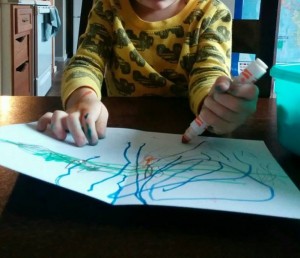
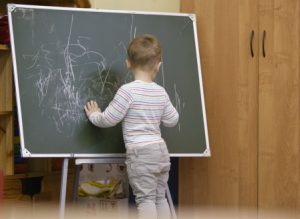
making a pirate mapFor a start, a brown paper bag, so the map looks old, is more fun than a plain piece of paper. Let your child use pens, pencils, markers, highlighters, anything that will make marks on the map. Paths can go in all different directions and the lines can be wiggly, straight, zig-zag, curvy, whatever. There are no rules about pirate maps so kids feel much more confident with their own efforts. They can be creative and draw monsters, traps, and whatever they imagine.

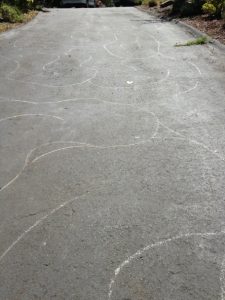
pirate activitiesKids need some experiences with paper and pencil activities. Making a pirate map is one way to motivate kids to experiment with these tools. If little ones need some outside time, they can draw one in chalk on the walk or driveway (but watch out for cars). That way there’s lots of space to cover with fun and imagination. Is this a doable learning and play activity at your house or center?


Share this:
Share this page via Email Share this page via Stumble Upon Share this page via Digg this Share this page via Facebook Share this page via Twitter
Share

Kindergarten Readiness: Children and Pets

children and petsKindergarten readiness not only comes in different shapes and sizes but in various creatures too. Having a pet is the dream and wish of kids. As kids develop a bond with their pets, they also learn to be gentle and caring. Having a pet comes with responsibilities like cleaning, feeding, and exercising. Children also learn to think not just of what they want but the wants and needs from the pet’s point of view. Does the kitty like to chase a stick? No, it likes to chase a piece of string. Does the dog like to watch tv? No, it likes to go for a walk, (and eat icecream).

Union presidents should have the negotiating skills of kids as they try and talk parents into getting a pet. But there’s lots of reasons why some pets are not possible, such as allergies, being in a place that doesn’t allow them, expense, and being away from home all day. Is having a pet a topic for discussion in your house?
grandpa-can-I-have-a-pet
In two fun little ebooks called Grandma, Can I Have A Pet? and Grandpa, Can I Have A Pet? written and illustrated by Paulie Merioux, a little boy suggests all kinds of pets. The text rhymes and there are some creative ideas for different sorts of pets, including a horse, cow, whale, and iguana. Grandpa, Can I Have A Pet is available for a free download April 13th on Amazon! (click here).It’s a fun little book to read aloud with kids.

children and petsA family in our neighborhood has a pet stick bug that lives in an old aquarium. It’s name is Branchy. Maybe one of the pets in the story will work for your house?

Share this:
Share this page via Email Share this page via Stumble Upon Share this page via Digg this Share this page via Facebook Share this page via Twitter
Share

Kindergarten Readiness: Pocket Treasure Hunt

Today you can tuck some kindergarten readiness fun and learning into a pocket. Children’s pockets hold all kinds of treasures and things they collect. From a special stone picked up on a walk to the bus, to a bit of shiny paper, to a tissue that smells like mommy, a car, block, or tiny stuffie, a pocket is handy for them all. Experience soon teaches parents to check kids’ pockets before doing the wash.

It’s no wonder that the little bear Corduroy wanted his very own pocket. Written by Don Freeman, A Pocket For Corduroy is anpocket-for-corduroy older book, but a favorite for kids because they can all relate to having a pocket. In the story the little bear looks for solutions to having a pocket of his own. It’s quite an adventure that stretches kids’ imagination as soap flakes turn into a ski hill and more.

Parents and caregivers can also use this book to explore with children how important it is not to go off on their own. Corduroy gets locked in the laundromat all night when he does that. Kids also hear how doing just a small thing for someone else can make a big difference. (Below is a video of this wonderful little book, about 8 minutes long.)

You and your child can talk about what’s in your pockets or go for a walk to find something to put in them. Your child can go for a pocket treasure hunt right in the house.  Did you know that pockets can also hold kisses?

Share this:
Share this page via Email Share this page via Stumble Upon Share this page via Digg this Share this page via Facebook Share this page via Twitter
Share

Kindergarten Readiness: Personal Photo Book

When I saw an activity from my friend Stephanie Haass’s blog Two-daloo I knew it would be perfect for a kindergarten readiness play-of-the-day. There is just so much fun and learning in a personalized photo book. Can you imagine how exciting it is to read about your very own adventures? It inspired us to make one.

One of the basic concepts for learning to read is the simple notion that letters and other squiggles hold meaning. This seems obvious to us but it isn’t to kids. Until kids understand that print makes sense in the first place, they can’t make sense out of the print-squiggles. This activity is a powerful way for kids to connect what the words are saying to what the picture is saying.

Another basic concept is that the words say the same thing every time. It doesn’t matter how many times each picture is read, did you know it would always be the same? Of course, adults know that but it’s something that kids have to learn. Just reading over and over will help young children’s brains develop these ideas.

Once kids know that the words hold meaning and that they stay the same, some children will begin to recognize some of the same words. This is how children develop sight vocabulary. And they do it on their own when we give them lots and lots of experiences. Here is the book that we made (our book had all the words on the photos.) Can you and your child make a personal photo book for reading, learning, fun, and sharing too?

Share this:
Share this page via Email Share this page via Stumble Upon Share this page via Digg this Share this page via Facebook Share this page via Twitter
Share

Kindergarten Readiness – Conversations with Guest Experts #5

For each radio show on Learn and Play with Mrs A, I take notes because I’m learning so much about kids and kindergarten readiness from fascinating guests who are experts in a variety of areas. Each of them is passionate about kids and loves the work, or maybe that’s play? Here’s a play-of-the-day suggested from our play-of-the-week conversations and a little information about these awesome guests.

Speech and language development is a major part of children’s early learning. From cries, to sounds, to a few words, to whole conversations, children develop the skills and abilities to use language in just a few years. During a conversation with speech and language specialist, Lynne Patrick, she mentioned lots of ways and activities to support children and provide language stimulation such as songs, stories, talking together, and books. Book aren’t just for reading, they are for talking, too.

developing kindergarten readinessFor a play-of-the-day how about a talking book? An old favorite book is Bow, Wow, Meow. The story asks a question and the kids say the answer, “How does the dog go? Bow wow. How does the kitty go? Me-ow. How does the clock go? Tick-tock.” There are many books and stories that kids can read along, add words, and finish the sentences. Can you and your child “talk” a book today?

Here is the podcast link for the conversation with Lynne Patrick:
Lynne Patrick/Learn and Play with Mrs A

Share this:
Share this page via Email Share this page via Stumble Upon Share this page via Digg this Share this page via Facebook Share this page via Twitter
Share

Kindergarten Readiness – Conversations with Guest Experts #1

For each radio show on Learn and Play with Mrs A, I take notes because I’m learning so much about kids and kindergarten readiness from fascinating guests who are experts in a variety of areas. Each of them is passionate about kids and loves the work, or maybe that’s play? Here’s a play-of-the-day suggested from our play-of-the-week conversations and a little information about these awesome guests.

Terri Mack was taking delivery of over 80,000 books the week we talked. Any guesses about her passion? Terri is an educator and literacy coordinator who began compiling books for aboriginal/indigenous readers. Then she assembled a team to write stories using indigenous themes for any and all early readers.
circle-of-friends-terri-mack-strong-nations
Her play-of-the-day is to read and share books and stories with little ones. In any language that’s comfortable for you and your child. She calls stories “brain-candy”, and says to help children become kids-who-want-to-read that we “need to make it fun.”  What books will you share with your child today?

Terri’s website is: www.strongnations.com (the Kids Books tab is my favorite). Here is the link to the podcast to hear more about and from Terri:
Terri Mack/Learn&Play podcast

Share this:
Share this page via Email Share this page via Stumble Upon Share this page via Digg this Share this page via Facebook Share this page via Twitter
Share

Kindergarten Readiness ABC`s – R is for Rhyme Time

Once upon a time, we can help children develop kindergarten readiness with words that rhyme. And it will take time for children to be able to rhyme words.

bat-mat-sat

Words are tools for communicating to others and for thinking. But words are based on a system of sounds. For instance, the word cat has 3 sounds; a ‘kuh’ sound, a short ‘a’ sound and a ‘tuh’ sound. When these sounds are put together they make the sound bite for cat. By taking away the ‘kuh’ part and using just the ‘at’ we can make more words, like bat, rat, fat, hat and sat. Knowing how sounds make words and how they can be used to build other words is a key strategy for the time when children learn to read.

It is not yet known how the brain figures out that words are made of sounds and that these sounds come in very small pieces. But this skill does have a name; it’s called phonological awareness. Children develop this skill from hearing lots and lots and lots of words over and over. Not all children can rhyme by the time they come to kindergarten, but this ability generally develops around the age of 4 or 5 years old. Reading and sharing books and stories that use rhymes can help build this awareness. Plus, words that rhyme appeal to children.

Today’s play-of-the-day is to have some rhyme time fun. Even if your child has not yet figured out that words may sound almost the same, can you read a story with rhyming words, tell a nursery rhyme, or sing along with a song?

Share this:
Share this page via Email Share this page via Stumble Upon Share this page via Digg this Share this page via Facebook Share this page via Twitter
Share

Kindergarten Readiness/Early Learning Basics: Letter Sounds

Parents and caregivers often ask what young children need to know before kindergarten; this is the 17th in a series of blog posts on kindergarten readiness and early learning basics. No matter the age of your little one, this will give you a general picture of what to do as your child’s very first teacher.Parents Serving Turkey

Kindergarten readiness fun and learning can happen anytime, even holidays. And a great deal of learning happens using language. Somehow, even though no one ever tells us, we figure out that language is a system of sounds. These sounds can be taken apart and put back together, kind of like a puzzle. The word pie is really 2 sounds, the “puh” and the “eye”. Words like tie, spy, my, bye, guy, hi, have the same “eye” sound but start with a different one. After reading lots of books to children with words that rhyme, the brain connections form, and kids gradually begin to expect words that sound the same. About the age of 4, they are able to guess what a word might be in a story. For instance, if they hear Jack and JILL went up the…they may be able to say HILL.

This skill of hearing and using sound bits is called phonological awareness. For it to develop, children need to hear lots and lots of words from books, stories, songs, and conversations. Besides words that rhyme, there are words that start with the same sound. Like pie and pants and purple. Or, if there will be turkey at your house, like turkey and two and tickle.

Having fun with words can piggy-back with other activities. When setting the table you could say “Oh, said the fish, here is another dish. Oh, said the moon, here is a ____.” If your child is not yet able to finish that with the word spoon, you can. Your child will still hear the rhyme and add it to the brain bank. When peeling potatoes notice that they start with the same sound and share that with your little one. What other learning and fun, with words and sounds, can you dish up for your little one?

Share this:
Share this page via Email Share this page via Stumble Upon Share this page via Digg this Share this page via Facebook Share this page via Twitter
Share

Some Handy Ideas for Kindergarten Readiness: Talking

Hands that talk are great fun and can be part of  kindergarten readiness learning. Today, hands can say/show about fall. This is an easy one to do:

Signing a few words is another way to stimulate early brain development. As children learn to connect a word and an action, their brains are making connections too. Representing words with actions also helps build pathways that will later be used for learning to read. Can this be part of your action plan for today?

Share this:
Share this page via Email Share this page via Stumble Upon Share this page via Digg this Share this page via Facebook Share this page via Twitter
Share

Some Handy Ideas for Kindergarten Readiness: Reading

No matter if you have a child starting preschool or kindergarten this year, next year or a few years from now, do you know what the most important activity is that you can do at home? Best of all, it’s not just for kindergarten readiness but other kinds of development, too. It’s reading and sharing stories and books. A handful of minutes a day will stimulate the brain to make all kinds of connections.

A favorite book about hands is the classic Hand, Hand, Fingers, Thumb by Al Perkins. One of the key elements of this book is the rhyming text. Being able to figure out words that rhyme is a critical skill for learning to read. In order to rhyme, children need to divide words up into their sound parts and put them back together like mat, cat, rat, sat, etc. The “at” part stays the same and the mmm, ccc, rrr, and  sss change. This skill is called phonological awareness. In order for kids to develop this ability they need lots and lots of exposure to words and language. Reading books to them is a great way for young brains to build the word-sound connections.

There are many other terrific children’s books about hands. Your local library will probably have several. Hand, hand, fingers, thumb; holding books and reading some! Can you share some stories and books with your child today?


Share this:
Share this page via Email Share this page via Stumble Upon Share this page via Digg this Share this page via Facebook Share this page via Twitter
Share